
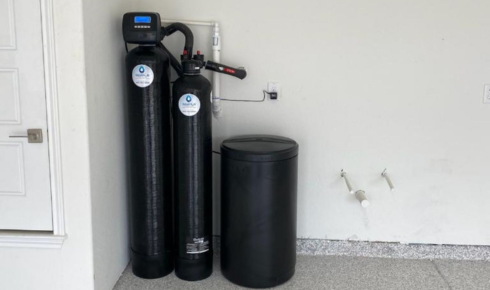
Most of us barely notice the equipment that keeps our homes running smoothly. The furnace hums along. The water heater does its thing. And somewhere in the corner of the basement, usually half-forgotten, sits the brine tank of your water softener—quietly doing a job that affects every shower, every load of laundry, every cup of coffee.
Until one day, something feels off.
The water isn’t quite right. Soap doesn’t lather. Dishes come out spotted. And you realize you haven’t looked at your softener in… well, a long time. That’s when the humble salt tank for water softener suddenly becomes very important.
The Part Everyone Forgets (Until It Stops Working)
Water softeners get most of the credit. The control valves, the resin beads, the fancy digital displays—those get all the attention. But the salt tank? That’s the part that makes the whole system possible.
Without salt, a softener is basically just a pipe with good intentions.
The salt tank’s job is simple in theory: hold salt, create brine, and regenerate the resin beads that remove hardness minerals from your water. In practice, it’s the part most likely to be neglected, mismanaged, or misunderstood.
And when it’s not working properly, the rest of your system quietly starts to fail.
How the Salt Tank Actually Does Its Job
Inside your softener system, the resin tank traps calcium and magnesium—the minerals that make water “hard.” Over time, those beads get saturated and need to be cleaned. That’s where the salt tank steps in.
During regeneration, salt dissolves into water to form brine. That brine flushes through the resin tank, washing away the hardness minerals and resetting the system for another cycle.
No salt, no brine.
No brine, no regeneration.
No regeneration… and you’re back to hard water.
It’s a simple process, but one that depends entirely on the health of your salt tank.
Not All Tanks Are Built the Same
If you’ve ever shopped for replacement parts, you’ve probably noticed there’s a surprising variety of water softener tanks out there. Tall ones. Short ones. Round. Square. Heavy-duty. Lightweight. Some with built-in safety floats, others with manual controls.
The differences matter more than most people realize.
A well-designed tank resists cracking, prevents salt bridging, and allows for proper brine flow. A poorly designed one can lead to constant issues: mushy salt at the bottom, false “empty” readings, or inconsistent regeneration cycles.
And here’s the part many homeowners miss: the tank that came with your system years ago might not be the best option for your current water usage. Families grow. Water use changes. Sometimes the tank that once worked fine just isn’t the right size anymore.
When the Salt Tank Becomes the Problem
Most softener issues don’t start with dramatic leaks or flashing error codes. They start subtly.
You might notice:
- The salt level never seems to go down
- A hard crust forming on top of the salt
- Water in the tank that looks murky or stagnant
- Your softener regenerating more often than usual
- Hard water symptoms slowly creeping back
Often, the issue isn’t the softener at all—it’s the salt tank water softener setup that’s clogged, bridged, or simply worn out.
Salt bridging, where a hard crust forms and blocks salt from dissolving, is one of the most common problems. So is salt mushing, where low-quality salt turns into sludge at the bottom of the tank. Both stop proper brine formation, and both quietly undermine the whole system.
Size, Shape, and Placement Actually Matter
It’s tempting to think, “A tank is a tank.” But in practice, size and placement can make a big difference.
A tank that’s too small for your household means frequent refills and inconsistent regeneration. One that’s too large can lead to stagnant brine and maintenance issues. Placement matters too—tanks sitting in cold basements or damp crawlspaces are more prone to cracking and condensation problems over time.
The right tank is one that matches:
- Your household size
- Your daily water usage
- The hardness level of your water
- The regeneration schedule of your softener
When those things line up, the system just works. When they don’t, you end up chasing problems that seem mysterious but usually trace back to the tank.
Maintenance: Boring, Necessary, and Totally Worth It
Nobody loves maintenance. But a few simple habits can keep your salt tank healthy for years.
- Check the salt level once a month
- Break up crusts before they become full bridges
- Clean the tank once a year if sludge builds up
- Use high-purity salt to avoid mushing
- Keep the tank at least one-third full at all times
These aren’t glamorous tasks. But they’re the difference between a softener that lasts 20 years and one that fails in seven.
When Replacement Makes More Sense Than Repair
Salt tanks don’t last forever. Over time, plastic becomes brittle. Floats fail. Brine lines clog. And sometimes, the cost of patching things up adds up quickly.
If your tank is:
- Cracked or leaking
- Constantly bridging despite good salt
- Too small for your current household
- Causing repeated regeneration problems
…it may be time to replace it.
The good news? Tanks are usually far cheaper to replace than full softener systems. Swapping out a failing tank can breathe new life into an otherwise perfectly good softener.
The Part That Quietly Protects Everything Else
Here’s the part most people overlook: when your salt tank works well, everything else benefits.
Your water heater runs more efficiently.
Your pipes stay cleaner.
Your appliances last longer.
Your soap works better.
Your skin feels better.
All of that depends on a plastic container in the corner of the room doing its job correctly.
Not flashy. Not smart-home connected. Just quietly essential.
Final Thought: Don’t Ignore the Simplest Piece
Water softeners are complex systems. But the salt tank is the simplest piece—and often the most important.
If your water doesn’t feel right, don’t start with the electronics or the resin bed. Start with the tank. Check the salt. Look for bridging. Make sure it’s actually doing what it’s supposed to do.
Because sometimes, the biggest improvements in your home’s comfort come from paying attention to the most overlooked details.
And in the world of soft water, it all starts in the salt tank.