Category: Sports

  • The Complete Guide to Pickleball Court Flooring for 2026

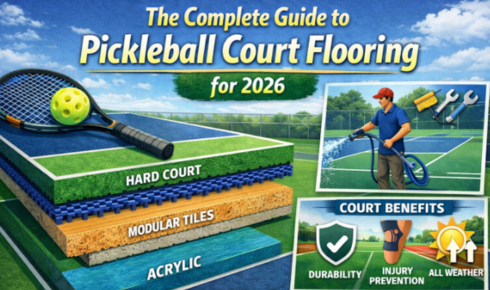
    The Complete Guide to Pickleball Court Flooring for 2026

    Pickleball is no longer a niche sport. Across schools, clubs, gated communities, sports academies, and commercial complexes, dedicated courts are being built at record speed. As demand grows, the focus is shifting from “just building a court” to selecting the right pickleball court flooring that ensures durability, player safety, and long-term value.

    In 2026, facility owners are prioritizing performance-driven surfaces, weather resistance, low maintenance, and compliance with official pickleball court dimensions. This complete guide covers everything needed to make informed decisions—from choosing the right pickleball court material to understanding the full pickleball court construction process.

    Understanding Official Pickleball Court Dimensions

    Before discussing flooring systems, it is important to understand standard pickleball court dimensions. According to official guidelines from organizations such as USA Pickleball and the International Federation of Pickleball:

    • Court size: 20 feet wide x 44 feet long
    • Non-volley zone (“kitchen”): 7 feet from the net on each side
    • Recommended total play area: 30 x 60 feet minimum
    • Preferred total area for tournaments: 34 x 64 feet

    Why does this matter for flooring? Because surface texture, base slope, and line marking precision must align exactly with these measurements. Poor planning during pickleball court construction often leads to incorrect slopes, uneven bounce, or misaligned markings.

    In 2026, precision planning and surface engineering are key components of professional installations.

    Why Pickleball Court Flooring Matters More Than Ever

    The right pickleball court flooring directly impacts:

    • Ball bounce consistency
    • Player traction and grip
    • Shock absorption
    • Surface lifespan
    • Maintenance costs

    Unlike casual recreational surfaces, modern pickleball courts are built for high-frequency usage. Clubs may host tournaments, coaching sessions, and daily public play. Inferior pickleball court material leads to cracks, fading, slippery surfaces, and expensive repairs within a few years.

    High-performance synthetic acrylic systems are currently among the most preferred surfaces due to their balance of durability, playability, and cost-efficiency.

    Types of Pickleball Court Flooring in 2026

    1. Acrylic Synthetic Flooring (Most Preferred)

    Acrylic-based pickleball court material is applied over a concrete or asphalt base. It consists of multiple layers including primer, resurfacer, cushion coats (optional), and textured topcoats.

    Advantages:

    • UV resistant
    • Anti-slip texture
    • Consistent ball bounce
    • Custom color options
    • Lower maintenance

    This system is widely used in competitive facilities and is often recommended by experienced pickleball court builders.

    2. Concrete Surface (Basic Option)

    Plain concrete courts are budget-friendly but lack cushioning and surface texture. Over time, they develop cracks due to temperature changes.

    Limitations:

    • Hard on joints
    • Slippery when wet
    • Poor long-term durability without coatings

    3. Modular Interlocking Tiles

    Tile systems are portable and quick to install. They work well for temporary setups but may produce different ball bounce characteristics compared to acrylic systems.

    Considerations:

    • Higher upfront cost
    • Expansion and contraction in extreme climates

    4. Cushioned Acrylic Systems

    For clubs prioritizing player comfort, cushioned layers can be added beneath the acrylic topcoat. These reduce joint stress and are ideal for senior players or training academies.

    In 2026, cushioned systems are gaining popularity due to increased awareness around player injury prevention.

    Step-by-Step Pickleball Court Construction Process

    Professional pickleball court construction involves several technical stages:

    1. Site Evaluation & Planning

    • Soil testing
    • Drainage analysis
    • Layout planning based on official pickleball court dimensions

    2. Base Preparation

    Two primary base options:

    • Concrete slab
    • Asphalt base

    The base must include proper slope (usually 1%) for water drainage.

    3. Crack Filling & Surface Preparation

    Before applying coatings, surfaces must be cleaned, leveled, and repaired.

    4. Application of Acrylic Layers

    • Primer coat
    • Resurfacer layer
    • Cushion coats (if required)
    • Textured color coats

    5. Line Marking

    Precise measurement ensures compliance with official standards.

    Experienced pickleball court builders follow this systematic approach to ensure long-term durability.

    Choosing the Right Pickleball Court Material

    Selecting the right pickleball court material depends on:

    Climate

    Hot regions require UV-resistant coatings.
    Coastal areas need moisture-resistant systems.

    Usage Frequency

    High-traffic facilities need reinforced acrylic layers.

    Budget

    Initial cost vs lifecycle cost must be evaluated.

    Maintenance Capacity

    Synthetic acrylic surfaces typically require:

    • Periodic cleaning
    • Minor crack repair
    • Recoating every few years

    Compared to tile systems, acrylic surfaces often offer better long-term value.

    Indoor vs Outdoor Pickleball Court Flooring

    Outdoor Courts

    • Require UV protection
    • Need proper drainage
    • Anti-slip texture is critical

    Indoor Courts

    • Controlled environment
    • Less weather damage
    • Often installed over concrete slabs

    Indoor surfaces may focus more on cushioning and aesthetics, while outdoor courts prioritize durability and weather resistance.

    Common Mistakes in Pickleball Court Construction

    Even experienced contractors can make errors. Common issues include:

    • Incorrect base slope causing water pooling
    • Low-quality pickleball court material
    • Improper curing time between layers
    • Inaccurate pickleball court dimensions
    • Skipping crack repair before coating

    Working with professional pickleball court builders minimizes these risks.

    Cost Overview for 2026

    Costs vary depending on location, base type, and surface system.

    Major cost components include:

    • Ground preparation
    • Base construction
    • Acrylic coating system
    • Labor
    • Line marking

    Although initial investment may seem significant, high-quality pickleball court flooring reduces long-term repair expenses.

    Maintenance Tips for Long-Lasting Performance

    To extend the lifespan of your pickleball court:

    • Clean debris weekly
    • Wash surface periodically
    • Inspect cracks annually
    • Recoat surface every 4–6 years
    • Avoid heavy non-sport equipment on court

    Preventive maintenance ensures consistent ball performance and player safety.

    2026 Trends in Pickleball Court Flooring

    The industry is evolving rapidly. Key trends include:

    1. Eco-Friendly Coatings

    Low-VOC acrylic systems are becoming standard.

    2. Cushioned Performance Surfaces

    Focus on injury prevention and player comfort.

    3. Multi-Sport Compatibility

    Facilities are designing courts that can accommodate tennis and badminton alongside pickleball.

    4. Smart Drainage Systems

    Advanced slope engineering reduces downtime after rainfall.

    5. Custom Color Branding

    Clubs are incorporating brand colors into court design.

    Why Professional Pickleball Court Builders Matter

    Hiring experienced pickleball court builders ensures:

    • Compliance with official pickleball court dimensions
    • Proper base engineering
    • Correct application of pickleball court material
    • Long-term durability
    • Reduced maintenance costs

    Professional construction avoids structural issues that may not be visible immediately but cause major problems later.

    Final Thoughts

    Pickleball’s rapid growth shows no signs of slowing down in 2026. As demand increases, the quality of pickleball court flooring is becoming a critical factor in facility success.

    Whether building a new court or resurfacing an existing one, attention to pickleball court material, accurate pickleball court dimensions, and proper pickleball court construction ensures long-term performance and player satisfaction.

    Investing in high-quality surfaces today translates into safer gameplay, consistent bounce, lower maintenance costs, and stronger facility reputation in the years ahead.

    For sports complexes, schools, residential communities, and commercial developers, selecting the right flooring system is not just a construction decision—it is a strategic investment in the future of the sport.

  • Football Jerseys and the Stories They Carry

    Football Jerseys and the Stories They Carry

    Football has this way of making ordinary things extraordinary. A whistle, a stadium seat, even a scarf becomes sacred when the game’s involved. But nothing captures that magic quite like the jersey. It’s not just something players wear on the pitch; it’s something fans carry into their lives, homes, and memories. Jerseys are almost like diaries—every stain, every thread, every design change holds a story.

    Ask any fan about their first kit, and they’ll tell you the year, the player’s name on the back, maybe even the smell of the shop where they bought it. That’s how powerful these shirts are. They stick, not just in our closets, but in our lives.


    For Liverpool supporters, the shirt means more than just color—it’s a banner of belief. The iconic red of a liverpool football jersey isn’t simply a fashion choice; it’s the pulse of Anfield stitched into fabric. When you see thousands of fans in that blazing red, singing “You’ll Never Walk Alone,” it feels less like a crowd and more like a single heartbeat.

    Liverpool’s jersey has seen glory nights in Istanbul, heartbreak in league races, and endless European memories. And yet, no matter the design tweaks—collars, stripes, subtle changes—it never loses that raw, emotional punch. For supporters, wearing it is almost ritualistic, a way of saying, “I’m part of this story, too.”


    Then there’s Inter Milan, whose black-and-blue stripes cut through football history like brush strokes on a canvas. The inter milan jersey doesn’t just symbolize a club—it’s Milan’s other half, the counterpoint to the red and black across town. Those vertical stripes, bold and unapologetic, have adorned legends from Zanetti to Ronaldo (the Brazilian one), and they’ve aged like fine art.

    Inter’s shirt isn’t static, though. Some years, the stripes are thinner, other years they’re wider, sometimes even interrupted by creative experiments. Fans argue, designers debate, but the heart of it never fades. Wear it in the San Siro and you’re wrapped in the echoes of tifos, chants, and the roar of derbies that split a city in two.


    Jerseys aren’t only about clubs. Some of the most beloved shirts belong to national teams, especially the ones that stand out in history. Think about Germany’s kits over the decades—minimalist yet bold, disciplined yet stylish. Among the most treasured is the germany retro jersey, often seen as a masterpiece of football design. Its geometric patterns and classic look are etched into the collective memory of fans worldwide.

    Wearing it isn’t just about supporting a team; it’s about nostalgia. It takes you back to iconic World Cup moments, to players who felt larger than life, to nights when football truly felt like the global game. Retro jerseys, in particular, remind us that fashion fades, but history never does.


    What’s striking about football jerseys is how they become universal language. You can wear one in a foreign country, and suddenly a stranger points, smiles, maybe even starts a conversation. You didn’t know each other five minutes ago, but that shared crest connects you. It’s like saying, “We speak the same football.”

    Jerseys travel better than passports. They show up in markets in Lagos, on kids playing in dusty streets in Delhi, in pubs in Dublin, and beaches in Brazil. They shrink the world, making it feel just a little closer, a little friendlier.


    There’s also the ritual side of things. Match day often starts not with the kickoff, but with the moment you pull on your shirt. It feels like armor, a silent way of declaring, “I’m ready.” Whether you’re going to the stadium, heading to a pub, or just watching from your couch, the act of wearing it transforms the day. It turns ordinary time into football time.

    And yes, it comes with risks too. Wear your team’s kit in “enemy territory” and you’re bound to get banter—or worse. But even that’s part of the theatre. Rivalries would feel half as fun if shirts didn’t serve as loud, visible reminders of which side you’re on.


    Another funny thing about jerseys: designs we hate today often become cult classics tomorrow. Fans groan about checkerboards, neon greens, or bizarre sponsor logos, only to treasure them decades later. It’s the alchemy of nostalgia. What once looked “ugly” ends up looking “vintage” once time has done its work.

    Collectors know this better than anyone. Old kits fetch eye-watering prices, and people proudly display them like works of art. Sometimes, they’re framed on walls; other times, they’re worn until the fabric nearly falls apart. Either way, they’re more than possessions—they’re little time machines.


    Of course, there’s the less romantic side too: the price tags. Modern jerseys cost a small fortune. Every season, fans roll their eyes and grumble, but queues outside club shops never really shrink. Because deep down, we know what we’re buying isn’t just polyester. It’s identity. It’s pride. It’s the ability to feel like part of something bigger than ourselves.

    And isn’t that what football is about, anyway? Belonging. Being able to say, “This is my team, my people, my colors.”


    The most beautiful part of all might be how jerseys bridge generations. Parents hand down old kits to their kids. Grandparents reminisce about shirts worn decades ago. Families wear them together in living rooms, uniting across age and memory. Football shirts become threads weaving people into the tapestry of a game that outlives all of us.

    A jersey from the past isn’t just fabric—it’s a story whispered across years. And a new one isn’t just merchandise—it’s a blank page waiting to be filled with triumphs, heartbreaks, and unforgettable nights.


    In the end, football jerseys matter because they hold us together. They’re imperfect, sometimes overpriced, occasionally controversial. Yet, we buy them, we wear them, we love them. Because they remind us of what it means to care deeply, irrationally, passionately about a game that’s so much more than just 22 players chasing a ball.

    They’re not just shirts. They’re pieces of who we are.

  • Why an ITF Certified Tennis Court Is Essential for Serious Play

    Why an ITF Certified Tennis Court Is Essential for Serious Play

    In the competitive world of tennis, the court surface is not just a foundation—it’s a critical factor that can influence the outcome of a match. From bounce accuracy to player safety, the quality of a tennis court determines how seriously a game can be played. This is where the importance of an ITF certified tennis court comes into play.

    The International Tennis Federation (ITF) sets the global benchmark for tennis court standards, ensuring that every certified court delivers consistent playing conditions. But what does ITF certification mean in practical terms? And what materials and systems are required to meet those standards?

    Let’s explore why ITF certification is essential, especially when it comes to materials like acrylic tennis court flooring, UV resistance tennis court material, and synthetic tennis court flooring.

    What is an ITF Certified Tennis Court?

    An ITF certified tennis court is one that has undergone rigorous testing by the International Tennis Federation to verify that it meets strict international performance standards. These include:

    • Surface Pace Ratings (Category 1–5): Ranging from slow to fast, determining how the ball behaves after contact.
    • Bounce Consistency: Ensures predictable ball movement across the entire surface.
    • Slip Resistance: Helps prevent injuries by providing adequate traction.
    • Durability: The surface must maintain its properties over time and under various weather conditions.

    Certification isn’t just for looks—it’s a functional guarantee of fairness, safety, and professional quality. Courts with ITF certification are eligible to host sanctioned national and international events, giving your facility higher credibility and professional appeal.

    The Role of Surface Materials in ITF Certification

    To achieve ITF certification, the surface material plays a foundational role. That’s why court builders and sports facility owners rely on advanced materials that deliver both performance and longevity.

    1. Acrylic Tennis Court Flooring

    Acrylic tennis court flooring is one of the most preferred surface systems for professional and ITF-level courts. Engineered using high-quality, weather-resistant acrylic resins, this flooring provides a uniform and consistent playing surface that meets the rigorous standards set by the International Tennis Federation. Its textured finish offers the perfect balance between grip and smoothness, allowing for controlled foot movement and precise ball bounce—essential for competitive play.

    What sets acrylic systems apart is their customizable pace, which can be adjusted based on player needs or ITF classification (slow, medium, or fast courts). These surfaces are also highly durable, capable of withstanding heavy foot traffic and varying climatic conditions, while requiring only minimal maintenance. Whether for clubs, academies, or tournaments, acrylic flooring delivers long-term performance with professional-grade quality.

    Why Tennis Court Floor Paint Shouldn’t Be Overlooked

    While surface systems get the spotlight, tennis court floor paint is equally vital for ensuring ITF compliance. It’s not just about aesthetics—high-quality floor paint influences the game by:

    • Enhancing traction and friction
    • Maintaining color consistency under harsh sunlight
    • Reducing surface wear and tear

    Only ITF-compliant paints are designed with non-slip technology and engineered for consistent performance. Cheap or non-standard paint can result in uneven bounce, slippery conditions, and early fading.

    UV Resistance Tennis Court Material: Built for Indian Climate

    In India’s hot and sunny conditions, standard court surfaces often degrade quickly. That’s why choosing UV resistance tennis court material is critical for maintaining court quality and performance over time.

    UV-resistant coatings are specially formulated to:

    • Preserve surface integrity under intense, year-round sunlight
    • Prevent issues like cracking, chalking, and fading caused by UV damage
    • Reduce surface heat buildup, keeping courts cooler and safer for players

    These features not only improve the court’s durability but also contribute to consistent ball behavior and longer surface life—key factors for ITF certification. For commercial sports complexes and private academies alike, UV-resistant materials are a smart, climate-specific investment.

    Premium Tennis Court Material: Quality That Shows

    For serious play, premium tennis court materials aren’t optional—they’re essential. These materials are designed to meet the performance and durability standards required by professionals and governing bodies like the ITF.

    Key components include:

    • Multi-layered acrylic systems for consistent bounce and pace
    • Cushion base coats that reduce player fatigue and improve shock absorption
    • Anti-skid and anti-fungal coatings to enhance safety and hygiene
    • UV-resistant, eco-friendly formulations for long-lasting surface protection

    Using high-grade materials ensures the court performs reliably, lasts longer, and requires minimal upkeep. It also helps in achieving ITF certification by meeting strict standards for pace, texture, and playability.

    Synthetic Tennis Court Flooring: The Smart Solution

    Modern synthetic tennis court flooring systems offer a perfect combination of performance, ease of installation, and longevity. Designed to withstand extreme weather and intensive usage, these surfaces:

    • Support customized ITF pace classifications
    • Are easy to maintain and clean
    • Can be tailored with cushioned layers for added player comfort
    • Are available in multiple color schemes and textures

    Synthetic systems are a go-to choice for schools, academies, clubs, and sports complexes aiming for long-term reliability and certification-readiness.

    ITF Certification Adds Value to Your Court

    Whether you’re constructing a brand-new tennis court or upgrading an existing one, aiming for ITF certification can transform your facility from standard to stand out. ITF certification allows you to host officially recognized tournaments and high-profile matches, giving your court instant credibility in the competitive tennis world.

    It helps you attract elite players, coaches, and training academies who seek professional-grade surfaces for serious practice and play. Your facility gains a reputation for quality, which builds lasting trust with players, visitors, and stakeholders alike.

    Most importantly, an ITF-certified court ensures consistent performance and player safety—both critical for maintaining a professional environment. In short, certification isn’t just about compliance—it’s about proving your commitment to excellence, performance, and global standards.

    Conclusion

    If you’re serious about tennis—whether as a facility manager, investor, coach, or player—then investing in an ITF certified tennis court is a decision that pays off in performance, reputation, and longevity. From high-grade acrylic tennis court flooring and premium tennis court material to specialized tennis court floor paint and UV resistance tennis court material, every detail matters.

    With the right materials and professional installation, a synthetic tennis court flooring system can easily meet and exceed ITF standards. Choose quality, aim for certification, and deliver a court that’s truly built for champions.

  • Best Synthetic Acrylic Volleyball Court Flooring Materials

    Best Synthetic Acrylic Volleyball Court Flooring Materials

    The growing focus on structured sports infrastructure in India has led to a rising demand for durable volleyball court flooring systems. Ideal for schools, clubs, academies, and recreational centers, the right volleyball court surface enhances player safety, performance, and long-term court integrity. Synthetic acrylic volleyball court flooring material is now widely used due to its weather resistance, shock absorption, and low maintenance. Suitable for both indoor and outdoor volleyball court surfaces, this material ensures consistent grip and bounce. Choosing the right volleyball court material manufacturer and experienced volleyball court builder is essential for quality volleyball court construction and reliable performance. This flooring system supports modern standards in sports facility development across India.

    Importance of Quality Volleyball Court Flooring

    A high-performance volleyball court surface plays a crucial role in delivering smooth gameplay, enhanced player safety, and reduced long-term maintenance. Whether used in schools, clubs, training academies, or recreational centers, proper flooring ensures grip, consistent bounce, and shock absorption. These factors are especially vital in both competitive and non-competitive environments. Among modern solutions, synthetic acrylic volleyball court flooring material has emerged as a leading choice due to its superior durability, weather resistance, and cost efficiency. Designed to withstand harsh climates and frequent usage, it is widely applied in outdoor volleyball court surfaces as well.

    Selecting the right volleyball court material is a critical step in any volleyball court construction project. Reliable volleyball court material manufacturers offer certified systems that align with international standards and performance expectations. Proper volleyball court installation, carried out by experienced professionals, ensures optimal results and long-lasting play conditions. From site preparation to finishing, each layer of synthetic acrylic flooring material contributes to performance, safety, and overall surface longevity. This flooring solution continues to support the growth of sports infrastructure across India.

    Why Synthetic Acrylic Flooring Material Is Preferred

    Synthetic acrylic flooring material stands out due to its versatility, cost-effectiveness, and ease of application. These surfaces are specifically engineered to meet international sports standards while withstanding the unique environmental conditions across India.

    Key Benefits:

    1. Weather Resistance: Designed to endure intense heat, monsoons, and varying humidity levels, synthetic acrylic volleyball court flooring material is ideal for outdoor volleyball court surfaces. Its UV resistance ensures color retention and material integrity over time.

    2. Player Safety: The non-slip, cushioned texture of acrylic flooring significantly reduces the risk of slips and falls. Enhanced shock absorption minimizes stress on joints and muscles, making the surface suitable for all age groups and skill levels.

    3. Consistent Ball Bounce and Traction: High-quality volleyball court flooring material guarantees uniform ball bounce and optimal traction, supporting fast-paced movements and better game control.
    4. Low Maintenance Requirements: Acrylic surfaces require minimal upkeep compared to other flooring types. Regular cleaning and occasional resurfacing keep the court in optimal condition without major investments.

    Applications of Synthetic Acrylic Volleyball Court Flooring

    Synthetic acrylic volleyball court flooring is suitable for a wide range of installations:

    • School and university sports grounds
    • Sports clubs and training academies
    • Community recreation centers
    • Private residential setups
    • Government-sponsored playgrounds

    Each application demands customized flooring solutions based on usage, frequency of play, and climate exposure. Flexibility in design, thickness, and color allows adaptation to diverse project requirements.

    Role of a Volleyball Court Material Manufacturer

    The quality of any volleyball court depends largely on the expertise of the volleyball court material manufacturer involved in the project. Trusted manufacturers supply tested and certified materials that meet safety, performance, and durability standards. A reliable synthetic acrylic volleyball court material manufacturer ensures uniform quality and availability across different geographic regions.

    Manufacturers typically provide various system options, including

    • Standard Acrylic Systems for basic performance needs
    • Cushioned Acrylic Systems for enhanced comfort and injury prevention
    • Textured Non-Slip Finishes for outdoor installations with maximum grip

    Proper technical guidance from the manufacturer also supports a smooth and efficient installation process.

    Volleyball Court Construction and Installation Process

    Successful volleyball court construction involves multiple stages, each crucial to achieving a premium playing surface.

    1. Site Preparation: A thorough site inspection ensures appropriate leveling, drainage, and base stability. The base layer—usually concrete or asphalt—is compacted and graded to required specifications.

    2. Application of Flooring Material: Multiple layers of synthetic acrylic flooring material are applied in stages, allowing for precision thickness and surface quality. Each layer contributes to grip, elasticity, and weatherproofing.

    3. Marking and Accessories Installation: Permanent game lines are painted with fade-resistant acrylic paint. Net posts and boundary fencing are added following installation.

    Proper volleyball court installation minimizes long-term maintenance issues such as surface cracks, water retention, or uneven bounce. Employing an experienced volleyball court builder ensures technical compliance and timely execution.

    Outdoor Volleyball Court Flooring Considerations

    Outdoor volleyball court flooring demands special consideration due to exposure to natural elements. Acrylic systems tailored for outdoor use offer the following benefits:

    • Enhanced UV resistance
    • Water-repellent and quick-dry properties
    • Anti-slip texture for wet conditions
    • High surface durability against foot traffic and temperature fluctuations

    For regions with heavy rainfall or high temperatures, the selected outdoor volleyball court surface must maintain integrity and performance under pressure. The right combination of base preparation and synthetic acrylic layers provides optimal resilience.

    Customization and Design Options

    Custom volleyball courts are increasingly in demand across India. Facilities now opt for

    • Multi-color surfaces to match institutional branding
    • Varying thickness levels based on age group and game intensity
    • Specific surface textures for either high-grip or smooth finishes
    • Eco-friendly materials with low environmental impact

    These options allow planners and architects to create surfaces tailored to specific needs while maintaining compliance with game standards.

    Sustainable Flooring Solutions

    Modern synthetic acrylic volleyball court flooring material is formulated to be non-toxic, lead-free, and environmentally safe. Sustainable manufacturing practices adopted by top manufacturers further reduce waste, emissions, and energy consumption. Facilities adopting such surfaces contribute to long-term environmental stewardship.

    Conclusion

    The choice of volleyball court flooring significantly impacts performance, safety, and durability. Synthetic acrylic volleyball court flooring material is widely preferred for its excellent grip, weather resistance, and low maintenance. Ideal for both indoor and outdoor volleyball court surfaces, this flooring supports consistent play and injury prevention. Selecting high-quality volleyball court material from a trusted volleyball court material manufacturer, combined with professional volleyball court installation, ensures long-lasting and reliable court performance. Suitable for schools, clubs, and sports facilities, this surface type meets modern standards and enhances usability across diverse environments in India.

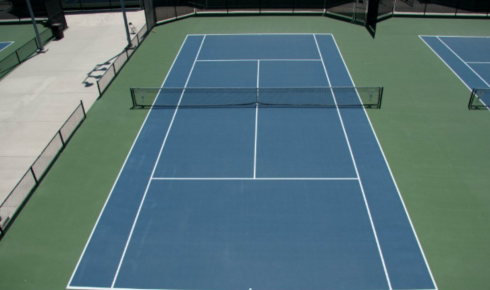
  • Outdoor Tennis Court or Indoor? Choosing the Right Court Type

    Outdoor Tennis Court or Indoor? Choosing the Right Court Type

    Tennis enthusiasts and sports facility developers often face a crucial decision when planning a new court: should they opt for an outdoor tennis court or an indoor one? The choice depends on various factors, including climate, budget, maintenance, and player preferences. Let’s explore the advantages and considerations for both options to help you make the right decision.

    Advantages of an Outdoor Tennis Court

    1. Natural Playing Environment

    An outdoor tennis court provides a natural atmosphere with fresh air and open surroundings, enhancing the overall playing experience.

    2. Cost-Effective Construction

    Compared to indoor courts, tennis court construction for outdoor facilities is generally more affordable since it doesn’t require roofing or artificial lighting.

    3. Variety of Tennis Court Surfacing Options

    Outdoor courts offer flexibility in tennis court surfacing, allowing options like acrylic, clay, grass, and synthetic turf to match different playing styles and budgets.

    4. Lower Maintenance Costs

    Outdoor courts require less maintenance compared to indoor facilities, as there is no need for climate control systems.

    Considerations for an Outdoor Tennis Court

    • Weather Dependence: Rain, extreme heat, or cold can make the court unusable.
    • Surface Wear and Tear: Exposure to sunlight, wind, and rain may require more frequent resurfacing.
    • Limited Playtime: Without lighting, play is restricted to daylight hours.

    Advantages of an Indoor Tennis Court

    1. Year-Round Playability

    Indoor courts provide a controlled environment, allowing play regardless of weather conditions.

    2. Enhanced Durability

    Indoor courts experience less exposure to natural elements, reducing wear and increasing longevity.

    3. Consistent Playing Conditions

    With a regulated temperature and wind-free setting, indoor courts provide consistent bounce and speed.

    4. Extended Play Hours

    Artificial lighting allows play at any time, making it ideal for training and competitions.

    Considerations for an Indoor Tennis Court

    • Higher Construction Costs: Indoor facilities require additional investments in roofing, walls, lighting, and climate control.
    • Increased Maintenance: Climate control systems and indoor surfacing may require regular maintenance and upkeep.
    • Space Requirements: A larger indoor facility may be needed, increasing land and construction costs.

    Choosing the Right Court Type

    The decision between an outdoor tennis court and an indoor one depends on various factors, including:

    • Budget: Outdoor courts are generally more affordable.
    • Location and Climate: In regions with extreme weather, an indoor court may be the best option.
    • Usage and Availability: If you require year-round play and controlled conditions, an indoor court is the way to go.
    • Type of Tennis Court Surfacing: Outdoor courts offer a variety of surfaces, while indoor courts usually have acrylic or synthetic flooring.

    Conclusion

    Both outdoor tennis court and indoor options come with their own benefits and considerations. Understanding your specific needs, budget, and climate conditions will help you make an informed choice. Whether you opt for outdoor or indoor, ensuring quality tennis court construction and selecting the right tennis court surfacing will enhance the playing experience and court longevity.